

1. What are web development best practices in business website development?
In today’s digital environment, website development is no longer just about building an online presence. It is about creating a business website that delivers value through performance, usability, and visibility on search engines.
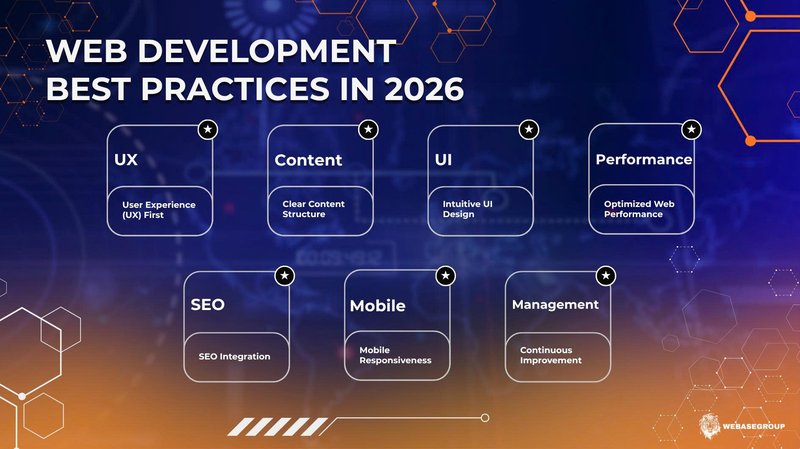
Web development best practices refer to a set of proven methods that help businesses build websites that are efficient, scalable, and aligned with user experience design and user interface design standards.
In most website development projects, these practices focus on:
- Structuring content clearly for users.
- Designing intuitive interfaces.
- Optimizing web performance.
- Ensuring the website can rank higher on Google.
By applying the right strategies, businesses can not only build website platforms but also improve website traffic, enhance engagement, and support long-term digital growth.

2. Top web development best practices businesses should follow in 2026
2.1 Prioritize user experience design from the beginning
One of the most important user experience best practices is to consider UX from the earliest stage of website development.
Instead of adding UX at the final stage, businesses should define:
- Target users and their behavior.
- Key user journeys on the website.
- Expected actions such as form submissions or purchases.
When user experience design is prioritized early, businesses can improve website conversion and reduce bounce rates significantly.
2.2 Build a clear and scalable content structure
A well-structured website helps users easily navigate information while also supporting website SEO and improving overall user experience design. This is one of the most essential web development best practices for any business website solution.
A clear structure typically includes:
- Homepage with key messaging: The homepage introduces the business, highlights core value propositions, and guides users toward important sections. This is where businesses communicate their brand clearly and make a strong first impression.
- Service or product pages: These pages provide detailed information about what the business offers. Whether it is services or products, content should be structured clearly to help users understand benefits, features, and use cases.
- Case studies or projects: Case studies showcase real-world applications, helping build trust and credibility. For many website development projects, this section demonstrates expertise and provides practical insights into how solutions are implemented.
- Blog/News or knowledge hub: A blog is important to optimize SEO by addressing specific user questions and search intent. By consistently publishing valuable and relevant content, businesses can increase their visibility on search engines, attract more qualified visitors, and establish themselves as trusted voices within their industry.
- Contact page: The contact page allows users to easily reach the business. A clear and accessible contact system plays an important role in improving website conversion and supporting customer interaction.
This structure not only improves navigation but also helps optimize SEO and improve organic traffic.
2.3 Optimize user interface design for usability
While UX focuses on experience, user interface design determines how users interact visually with a website.
An effective UI should:
- Use consistent layouts and design systems.
- Highlight important actions (CTA buttons).
- Ensure readability across devices.
Businesses investing in UX UI design often see better engagement because users can easily understand and interact with the website.
2.4 Optimize web performance and loading speed
In 2026, web performance continues to be a critical ranking factor for SEO and user experience.
To optimize web performance, businesses should:
- Compress images without reducing quality.
- Reduce unnecessary scripts.
- Optimize system architecture.
These improvements help:
- Improve website ranking.
- Improve website traffic.
- Deliver a faster and more reliable experience.
For businesses asking how to optimize website performance, this is one of the most impactful starting points.
2.5 Apply SEO best practices during website development
SEO should not be treated as a separate phase. Instead, it should be integrated directly into the website development process.
Key best SEO practices include:
- Optimizing page titles and meta descriptions to clearly reflect content and improve visibility on search engines.
- Structuring content with clear headings H1, H2, H3 to enhance readability and help users navigate information more easily.
- Using relevant keywords to align with user intent and improve discoverability.
- Ensuring the website is fully responsive to deliver a consistent experience across all devices.
By combining development and SEO, businesses can rank higher on Google and improve organic traffic more effectively.
2.6 Ensure cross-device and mobile optimization
Modern users access websites from multiple devices. Therefore, every business website must be optimized for:
- Desktop
- Tablet
- Mobile
Responsive design is no longer optional. It is a core requirement in web development best practices to ensure consistent user experience design across all devices.
2.7 Continuously test and improve website performance
A successful website is never “finished.” Continuous improvement is key to maintaining performance and competitiveness.
Businesses should:
- Check website SEO optimization regularly
- Monitor user behavior and engagement
- Improve website conversion based on data insights
This ongoing process helps businesses improve website ranking and stay competitive in search results.
3. WebaseGroup approach to modern website development
At WebaseGroup, website development is approached as a combination of technology, design, and business strategy.
As a WebaseGroup tech partner and digital partner, the team focuses on:
- Aligning business goals with user experience design.
- Building scalable systems for long-term growth.
- Applying web development best practices and best SEO tips from the early stages.
Each WebaseGroup website development project is designed to:
- Improve web performance.
- Enhance user interface design.
- Optimize SEO for better ranking website results.
This approach allows businesses to not only build website platforms but also create effective digital solutions that drive measurable results.
4. Why web development best practices matter for businesses in 2026
As competition in the digital space continues to grow, businesses need more than just a functional website.
Applying the right web development best practices helps businesses:
- Improve website traffic and visibility.
- Improve website conversion and user engagement.
- Build a strong and scalable business website solution.
More importantly, it ensures that the website can adapt to future trends in user experience design, SEO, and technology.
5. Conclusion
In 2026, successful business website development requires a balanced approach between technology, design, and SEO.
By focusing on user experience design, optimizing user interface design, and applying SEO best practices, businesses can build websites that not only perform well but also deliver real value to users.
With the support of a reliable partner like WebaseGroup, businesses can confidently develop websites that are optimized for performance, visibility, and long-term growth in the digital landscape.