1. UX Design in Website Development
1.1 What is User Experience Design?
User experience design focuses on how users interact with your website, ensuring that every step - from landing on a page to completing an action - is smooth, intuitive, and efficient. In modern website development, UX plays a critical role in helping businesses improve website traffic, enhance usability, and support long-term website SEO growth.
A well-optimized UX is essential if you want to build a website that not only looks good but also functions effectively. It helps users easily navigate, find information, and complete actions, which is critical for improving website SEO and achieving better ranking website results.
1.2 Key UX design elements in website development projects
When implementing UX in website development projects, businesses need to focus on multiple factors that directly impact usability, engagement, and web performance. A well-structured UX helps users navigate easily while supporting both seo onpage offpage and overall website ranking.
Key UX design elements include:
- Clear website structure and navigation to guide user journey.
- Fast loading speed and optimized website performance.
- Mobile responsiveness for better accessibility across devices.
- Content organization that supports optimize SEO and readability.
- User flow optimization to improve website conversion and engagement.

2. UI Design in UX UI Design Strategy
2.1 What is User Interface Design?
User interface design focuses on the visual and interactive aspects of a website, defining how it looks and how users interact with it. In any UX UI design strategy, UI plays a critical role in shaping first impressions and influencing user behavior.
A well-designed UI helps businesses create a professional and visually appealing business website, making it easier to attract users and improve website traffic. It is especially important in website development projects, where visual consistency and usability directly impact user experience and brand perception.
For companies looking to build website systems that are both functional and engaging, UI design is an essential part of web development best practices.
2.2 Key UI design elements for website conversion
When applying UX in website development projects, businesses need to focus on key elements that influence usability, engagement, and web performance. A strong UX structure not only improves user satisfaction but also supports seo onpage offpage and long-term growth.
Key UI design elements include:
- Clean layout with clear visual hierarchy to guide user attention.
- Consistent typography and color system for branding.
- Buttons and interactive elements to enhance usability.
- Responsive design for mobile-first experience.
- Visual clarity that supports readability and optimize SEO.

3. UX vs UI Design in Website Development: What’s the Difference?
Understanding the difference between UX and UI is essential when planning how to build a website or optimizing an existing one for better performance.
- User experience design (UX) focuses on usability, structure, and user journey.
- User interface design (UI) focuses on visuals, layout, and interaction.
A successful UX UI design approach combines both to:
- Improve website ranking and engagement.
- Support optimize web performance.
- Help businesses rank higher on Google.
- Deliver a complete business website solution.
4. Common UX UI design mistakes in website development
4.1 UX design mistakes that affect user experience
When working on website development projects, many businesses underestimate the importance of user experience design, leading to common mistakes that negatively impact usability and overall performance. Even a well-built business website can struggle if UX is not properly implemented.
Some of the most common UX mistakes include:
- Complicated navigation that makes it hard for users to find information.
- Poor content structure that reduces readability and engagement.
- Slow loading pages that hurt website performance / web performance.
- Lack of mobile optimization, affecting accessibility.
- Confusing user flows that reduce website conversion potential.
These issues often occur when businesses focus only on visuals instead of applying user experience best practices. To build a website that performs well, UX must be prioritized from the beginning of the website development process.
4.2 UI design mistakes that reduce website effectiveness
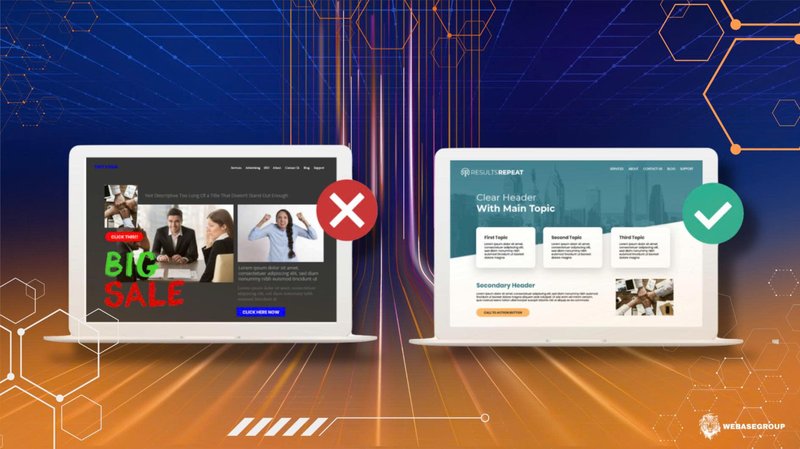
While UX focuses on usability, mistakes in user interface design can directly affect how users perceive your brand. In many UX UI design implementations, poor UI decisions can make a website look outdated or difficult to interact with.
Common UI mistakes include:
- Inconsistent colors, fonts, and branding across pages.
- Overloaded design with too many elements and distractions.
- Weak call-to-actions that fail to guide user behavior.
- Poor visual hierarchy, making content hard to scan.
- Non-responsive layouts that affect mobile users.
Avoiding these mistakes is essential for businesses that want to deliver professional website development projects and improve overall user satisfaction.
5. Final thoughts: Building a high-performing website with UX UI design
In today’s competitive digital environment, a successful business website is not just about design or functionality alone - it’s about how well everything works together. From user experience design to user interface design, every element plays a role in shaping how users interact with your website and how effectively it supports your business goals.
Whether you are planning how to build a website, optimizing an existing one, or managing multiple website development projects, investing in UX/UI is one of the most effective ways to create a scalable and high-performing business website solution.
For businesses looking to achieve better results, working with an experienced partner like WebaseGroup tech partner can help ensure your website is built with the right strategy - from design to performance to long-term optimization. By combining web development best practices, ux best practices, and smart execution, your website can become a powerful tool to grow traffic, improve performance, and stand out in a competitive market.