1. Why Vietnamese businesses need to choose a CMS based on the local market
When researching CMS platforms, many international articles often compare WordPress, Shopify, Wix, Squarespace, Webflow, Drupal, or HubSpot CMS. These are all popular platforms globally, but not all of them are suitable for the way businesses operate in Vietnam. In Vietnam, a website is not only a place to present company information. For many businesses, a website also needs to support SEO, landing pages, sales, product synchronization, Facebook, Zalo, e-commerce marketplaces, delivery services, online payments, order management, and customer care.
In addition, Vietnamese user behavior is strongly influenced by mobile usage, social media, and e-commerce. This means that websites in Vietnam should be considered as part of a wider digital ecosystem that includes Google, Facebook, TikTok, Zalo, e-commerce platforms, and other online sales channels. Therefore, when comparing CMS platforms for the Vietnamese market, businesses should not only ask: “Which platform is the most popular globally?” Instead, they should ask: “Which platform is the most suitable for the way Vietnamese businesses do marketing, sales, and content operations?”
2. What is a CMS?
CMS stands for Content Management System. It is a system that helps businesses create, edit, manage, and publish website content without depending completely on developers. For marketing teams, a CMS helps them publish blog articles, update service pages, edit images, create landing pages, manage products, optimize SEO, and launch content faster.
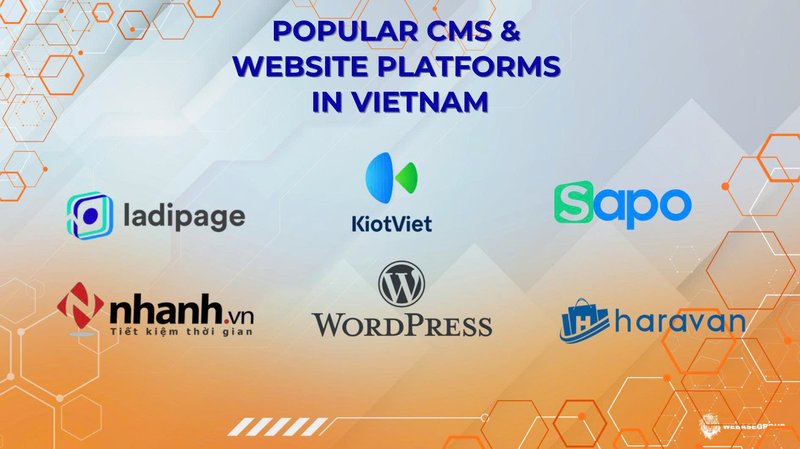
However, in Vietnam, the concept of CMS is often understood more broadly. In addition to traditional content management systems such as WordPress, businesses also use sales website platforms, landing page builders, or sales management systems with integrated website features, such as Sapo, Haravan, KiotViet, Nhanh.vn, and LadiPage. In other words, in the Vietnamese market, a CMS is not only a “place to publish articles.” It is also part of a broader system for marketing, sales, and customer care.
3. Popular CMS and website platforms in Vietnam
3.1. WordPress: Suitable for SEO, content marketing, and business websites
WordPress remains one of the most suitable options in Vietnam for businesses that need a flexible website, easy content management, and long-term SEO development. With WordPress, marketing teams can publish blog posts, update service pages, edit content, manage images, create article categories, and optimize basic SEO elements. This is why WordPress is often suitable for B2B companies, service providers, schools, training centers, clinics, real estate companies, technology companies, and brands that want to grow through Google search.
One of WordPress’s strengths in Vietnam is its large user base, wide agency support, rich plugin ecosystem, and availability of people who can manage and maintain it. However, WordPress should not be understood as a platform that automatically performs well once installed. To be effective, a WordPress website needs proper optimization for speed, security, content structure, mobile experience, hosting, plugins, and maintenance processes. Choose WordPress when: the business needs a corporate website, service website, blog, SEO platform, content hub, or a long-term content management system.
3.2. Sapo Web / Bizweb: Suitable for SMEs and online retail stores
Sapo Web, previously associated with Bizweb, is one of the familiar platforms for retail businesses and SMEs in Vietnam. Sapo positions itself as an omnichannel sales and management platform that helps sellers expand from physical stores to e-commerce marketplaces, Facebook, and websites, while managing sales data, inventory, invoices, and customer information in one place.
For marketers and shop owners, the strength of Sapo Web is that they do not need to start from a blank website. The platform already provides many sales-oriented features such as product management, order management, sales templates, channel connections, and operational tools.
Sapo Web is also commonly positioned as a website solution for online selling, with SEO-friendly and responsive interfaces suitable for many industries. Choose Sapo Web when: the business is a retail shop, SME, online store, or brand that needs an easy-to-manage sales website connected to Vietnam’s local sales ecosystem.
3.3. Haravan: Suitable for omnichannel sales and retail brands
Haravan is suitable for businesses that want to build a sales website combined with omnichannel operations. Haravan provides solutions for online and offline selling, including websites, social commerce, CRM marketing, customer care, and omnichannel sales activities. For retail businesses, especially D2C brands or retail chains, Haravan has an advantage because the website is not operated separately. It can be part of a larger sales system. Businesses can connect their website with consultation channels such as Zalo, Messenger, hotline, and live chat, while also implementing marketing automation, customer segmentation, and post-purchase customer care.
Haravan also offers Haraweb, a website solution positioned for professional website development, SEO-friendly structure, and sales-oriented templates. Choose Haravan when: the business focuses on omnichannel sales, CRM, customer care, social commerce, and retail operations.
3.4. KiotViet Website: Suitable for stores already using KiotViet
KiotViet is widely known in Vietnam as a POS and sales management software. Therefore, KiotViet Website is most suitable for stores already using KiotViet to manage products, inventory, orders, and daily sales operations. The strength of KiotViet Website lies in simplicity and synchronization. If a store already has product data, pricing, and inventory in KiotViet, creating a sales website can help open an additional online channel without managing separate data sources. This is practical for stores that want to expand online but still maintain centralized control over products, stock, and orders. Choose KiotViet Website when: the business is a retail store already using KiotViet and wants to create a sales website synchronized with its existing management system.
3.5. Nhanh.vn Website: Suitable for omnichannel online shops
Nhanh.vn is a multichannel sales management platform in Vietnam that provides solutions such as POS, websites, multichannel chat management, e-commerce marketplace integration, and delivery management. For online sellers, Nhanh.vn Website is suitable when the website needs to be connected with inventory management, order management, customer data, Facebook/Zalo/Shopee/Lazada chat, and delivery services.
Nhanh.vn is not only a website builder. It is a multichannel sales management system. Therefore, it is more suitable for shops with real sales operations rather than businesses that only need a corporate introduction website. Choose Nhanh.vn Website when: the business needs a sales website connected with inventory, orders, e-commerce marketplaces, delivery, and multichannel chat.
3.6. LadiPage: Suitable for landing pages and advertising campaigns
LadiPage is a familiar platform for many marketers in Vietnam, especially for advertising campaigns, lead generation, course sales, consultation registration, real estate, education, events, finance, and service-based businesses. Unlike WordPress or Sapo, LadiPage should not be seen as a complete replacement for a business website in every case. Instead, it is more suitable for quickly creating landing pages, testing messages, running ads, collecting leads, A/B testing, capturing form submissions, and optimizing conversion rates.
For marketers, LadiPage has a clear advantage: it is fast to deploy, easy to edit, suitable for campaign-based usage, and does not require heavy dependence on a technical team. Choose LadiPage when: the business needs landing pages for advertising campaigns, lead generation, consultation registration, product launches, or conversion measurement.
3.7. Custom CMS: Suitable for businesses with specific requirements
A Custom CMS is a content management system designed and developed specifically for a business’s needs. It is not the fastest or cheapest option, but it can be the right choice if the business has unique operational requirements. For example, a company with multiple departments, complex approval workflows, advanced user permissions, internal CRM/ERP integration, multilingual requirements, multiple markets, membership systems, customer portals, or complex product data may need a Custom CMS instead of an existing platform.
The main strength of a Custom CMS is its high level of customization. It can be designed around the business’s real workflow and provide better control over security, performance, and integration requirements. However, businesses need an experienced implementation partner, clear documentation, and a long-term maintenance plan. Choose Custom CMS when: the business has unique workflows, a large system, complex integration needs, or does not want to be limited by ready-made platforms.
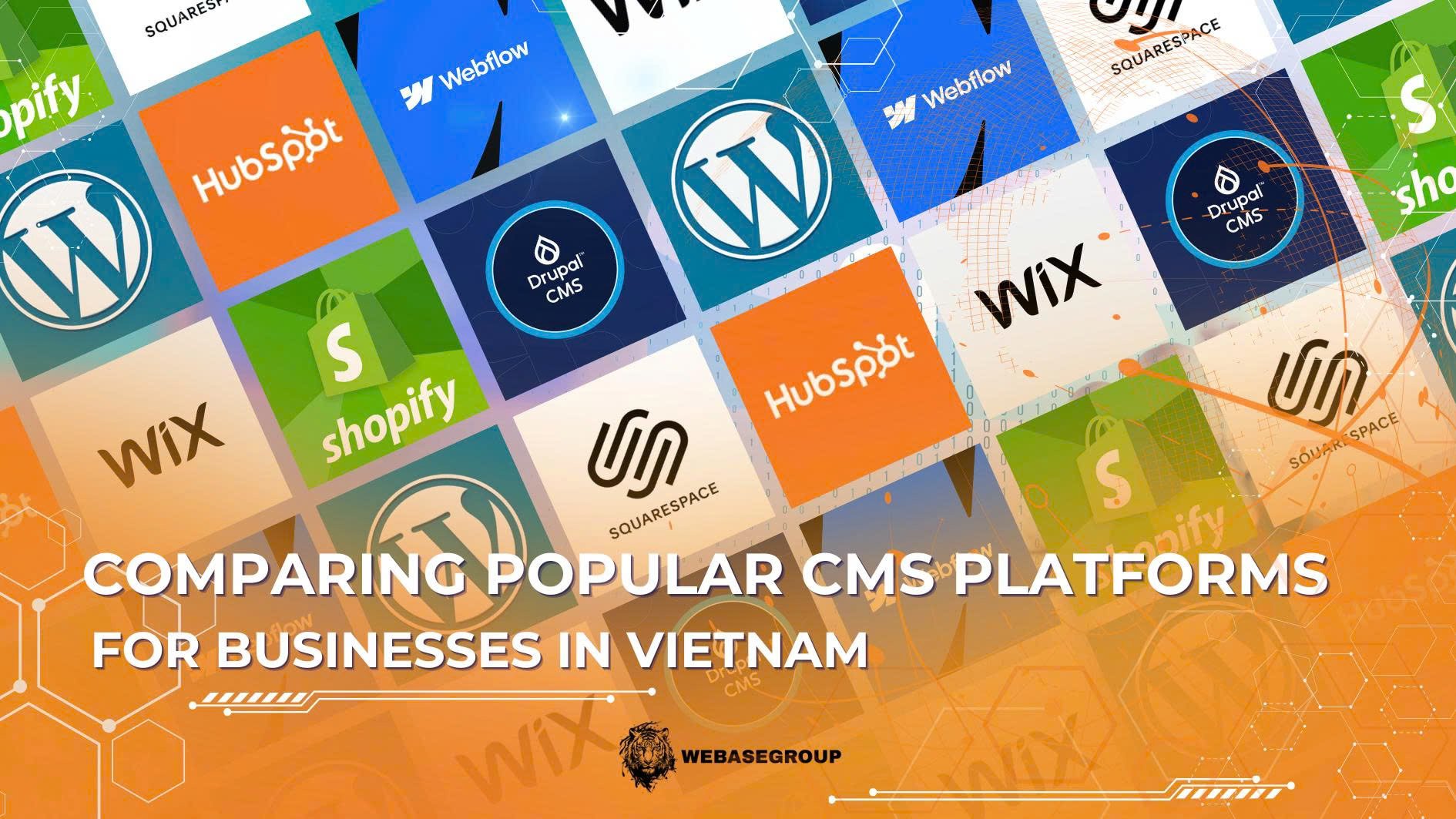
4. Are international platforms like Shopify, Wix, and Webflow still suitable in Vietnam?
Shopify, Wix, and Webflow are not “wrong” choices, but they should not always be the main comparison group for Vietnamese businesses. Shopify is suitable for businesses with a serious eCommerce direction, international selling needs, or the need for a strong eCommerce platform. However, for many SMEs in Vietnam, local platforms such as Sapo, Haravan, KiotViet, or Nhanh.vn are often closer to real operational needs, such as delivery integration, COD, marketplace connection, Facebook, Zalo, POS, and Vietnamese support. Wix and Squarespace are suitable for simple websites, portfolios, or personal use, but they are not usually the strongest choices for Vietnamese businesses that need SEO, content marketing, and long-term operations.
Webflow is suitable for modern brand websites or landing pages with high design requirements, but its cost, operating process, and handover to Vietnamese marketing teams need to be carefully considered. Therefore, in the Vietnamese context, international platforms should be viewed as additional options, not the main CMS group for every business.
5. Which CMS should Vietnamese businesses choose?
There is no single CMS that is best for every business. The right choice depends on the website’s goals, business model, budget, internal team, and long-term marketing strategy. If the business needs a corporate website, blog, SEO, and content marketing, WordPress is usually a suitable choice. If the business is an SME or retail store that needs an easy-to-manage sales website, Sapo Web is worth considering. If the business focuses on retail, D2C, social commerce, and omnichannel customer care, Haravan offers strong advantages. If the store is already using KiotViet and wants to open an online sales website synchronized with products, inventory, and orders, KiotViet Website is a practical option. If the shop needs multichannel sales management, e-commerce marketplace connection, chat management, and delivery integration, Nhanh.vn Website can be suitable. If the marketing team needs landing pages for advertising and lead generation, LadiPage is a useful tool. If the business has unique workflows, a large system, or complex integration requirements, Custom CMS may be more suitable than ready-made platforms.
6. WebaseGroup supports businesses in consulting and choosing the right CMS
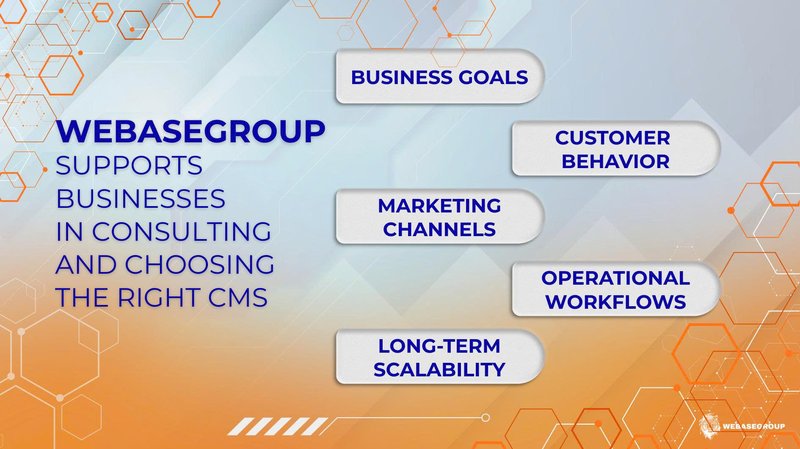
Choosing a CMS in Vietnam should not be based only on platform popularity. Businesses need to evaluate CMS platforms based on business goals, customer behavior, marketing channels, operational workflows, and long-term scalability. WebaseGroup is a company with more than 10 years of experience in website development projects, supporting businesses in consulting, selecting, and implementing the right CMS platform.
Instead of applying one fixed solution to every client, WebaseGroup can work with businesses to evaluate important factors such as: Whether the website is for branding, SEO, sales, or lead generation Whether the marketing team needs to manage content frequently Whether the business needs product, order, and inventory synchronization Whether the website needs to connect with Facebook, Zalo, CRM, ERP, or e-commerce marketplaces Whether the platform fits the company’s budget and internal operations Whether the website needs to scale in the next 2–3 years Whether the business should use an existing platform or develop a Custom CMS With practical implementation experience, WebaseGroup can help businesses choose a CMS that is not only suitable for the current stage, but also supports long-term website development, marketing, and business growth.
7. Conclusion
In Vietnam, choosing a CMS needs to be more practical than simply following international CMS comparison lists. Businesses do not only need a content management system. They need a platform that fits the way Vietnamese users search, buy, interact, and make decisions online. WordPress is suitable for SEO and corporate websites. Sapo Web, Haravan, KiotViet, and Nhanh.vn are suitable for sales, retail, and omnichannel operations. LadiPage is suitable for marketing campaigns and landing pages. Custom CMS is suitable for businesses with unique requirements or complex systems.
The right CMS will make the website easier to manage, support marketing more effectively, improve sales operations, and grow with the business in the long term. With more than 10 years of experience in website development, WebaseGroup can support businesses in consulting, selecting, and implementing CMS platforms that fit the Vietnamese market, helping websites not only look professional but also perform effectively in operations, SEO, marketing, and business growth.